The Importance of Timely Pipe Rehabilitation: Preventing Costly Damages

In the world of commercial and industrial plumbing, there’s a saying that goes, “It’s better to prevent than to cure.” This rings especially true when it comes to timely pipe rehabilitation. Neglecting this vital aspect can lead to a chain of expensive damages that not only disrupt operations but also hit your finances hard. Let’s dive into why timely pipe rehabilitation matters and how it can save you from these costly troubles.

Preventing Major Disasters

One of the main reasons to prioritize timely pipe rehabilitation is to avoid major disasters. Pipes deteriorate over time due to corrosion, aging, and environmental factors. Ignoring the warning signs can result in pipe bursts or leaks, causing significant damage to your property, equipment, and inventory. You can steer clear of these sudden and disruptive disasters by taking proactive steps to address rehabilitation needs.

Keeping Operations Running Smoothly

Timely pipe rehabilitation also ensures that your operations continue without interruptions. Imagine a scenario where a burst pipe brings a manufacturing facility to a halt or water damage wreaks havoc in a commercial complex. These disruptions hamper productivity and lead to costly downtime and repairs. Timely rehabilitation keeps your plumbing infrastructure strong, allowing your business to run smoothly without unexpected hiccups.

Safeguarding Health and Safety

Deteriorating pipes can pose health and safety hazards besides operational risks. Leaky pipes can contaminate water, promote mold growth, and weaken structures, putting the well-being of occupants and employees at risk. Timely rehabilitation helps mitigate these dangers, creating a safe and healthy environment for everyone on your premises.

Maximizing Cost-Efficiency

Contrary to common belief, investing in timely pipe rehabilitation is a smart financial move in the long term. While the upfront costs may seem daunting, they pale compared to the expenses incurred from major pipe failures and associated damages. Addressing issues early on helps avoid expensive emergency repairs, property damage claims, and potential legal hassles.

Fostering Sustainable Infrastructure Practices

Another compelling reason to prioritize timely pipe rehabilitation is to promote sustainable infrastructure practices. Proactive maintenance and rehabilitation reduce water wastage, energy consumption, and carbon emissions. They also prolong the lifespan of your plumbing systems, cutting down on the need for premature replacements and conserving resources.

In conclusion, timely pipe rehabilitation is crucial for commercial and industrial plumbing. It helps prevent costly damages, keeps operations running smoothly, safeguards health and safety, maximizes cost-efficiency, and fosters sustainable practices. Embracing a proactive approach isn’t just about maintaining infrastructure—it’s a strategic decision that protects your assets, optimizes operations and sets the stage for long-term success.

Click here to learn more.

Is Your BAS Outdated? Signs It’s Time for an Upgrade

Building Automation Systems (BAS) play a critical role in ensuring the efficient operation of modern buildings. However, like all technology, BAS can become outdated over time. Recognizing the signs of an outdated BAS is essential to maintaining optimal performance, reducing costs, and avoiding potential risks. In this post, we’ll identify common signs that indicate your BAS may be outdated and discuss the associated risks and inefficiencies.

Common Signs Your BAS Is Outdated

  1. Frequent System Failures and Malfunctions
    • If your BAS experiences frequent breakdowns or malfunctions or requires constant maintenance, it may be a sign that the system is outdated. These issues can disrupt building operations and lead to increased repair costs.
  2. Limited Integration Capabilities
    • Modern BAS are designed to integrate various building systems such as HVAC, lighting, and security. If your current BAS lacks integration capabilities or struggles to communicate with newer systems, it’s likely outdated.
  3. Inefficient Energy Management
    • An outdated BAS may not have the advanced energy management features found in modern systems. If you notice increased energy consumption and higher utility bills, it might be time to upgrade to a more energy-efficient system.
  4. Difficulty Finding Replacement Parts
    • As technology advances, older BAS components may become obsolete and difficult to replace. If you’re having trouble sourcing parts for repairs, this is a strong indicator that your system is outdated.
  5. Outdated User Interface
    • User interfaces on older BAS can be clunky and difficult to use. Modern BAS feature intuitive, user-friendly interfaces that simplify system management. If your BAS interface feels outdated and cumbersome, consider upgrading.
  6. Lack of Remote Access
    • Remote access and control are standard features in contemporary BAS, allowing building managers to monitor and adjust systems from anywhere. If your BAS lacks remote capabilities, it’s a clear sign of obsolescence.

Risks and Inefficiencies of an Outdated BAS

  • Increased Operational Costs
    • An outdated BAS can lead to higher operational costs due to inefficiencies, increased energy consumption, and frequent repairs. Upgrading to a modern system can result in significant cost savings.
  • Reduced Building Performance and Comfort
    • An inefficient BAS may struggle to maintain optimal indoor conditions, affecting occupant comfort and productivity. Modern systems provide precise control over environmental factors, enhancing overall building performance.
  • Higher Risk of System Failures
    • Older systems are more prone to failures and malfunctions, which can disrupt building operations and lead to costly downtime. A modern BAS offers improved reliability and reduced risk of unexpected failures.
  • Compliance Issues
    • Newer building codes and regulations often require advanced control and monitoring capabilities. An outdated BAS may not meet these requirements, leading to compliance issues and potential fines.
  • Security Vulnerabilities
    • Older BAS may lack the robust security features found in modern systems, making them vulnerable to cyber threats. Upgrading to a newer system with enhanced security measures is crucial to protecting your building’s infrastructure.
  • Missed Opportunities for Data-Driven Insights
    • Modern BAS provide valuable data and analytics that can be used to optimize building performance and identify areas for improvement. An outdated system may lack these capabilities, causing you to miss out on valuable insights.

Upgrading your BAS is an investment that can lead to improved efficiency, reduced costs, and enhanced building performance. By recognizing the signs of an outdated system and understanding the associated risks, you can make an informed decision about when it’s time to upgrade.

Contact Us to learn more or if you have any questions.

The Evolution of Building Automation Systems: A Historical Overview

Building Automation Systems (BAS) have come a long way since their inception, transforming from simple control mechanisms to sophisticated, integrated platforms that enhance building efficiency, comfort, and safety. Understanding the history and evolution of BAS helps to appreciate why certain parts and systems are no longer available and how technological advancements have shaped their current capabilities.

A Brief History of BAS Development

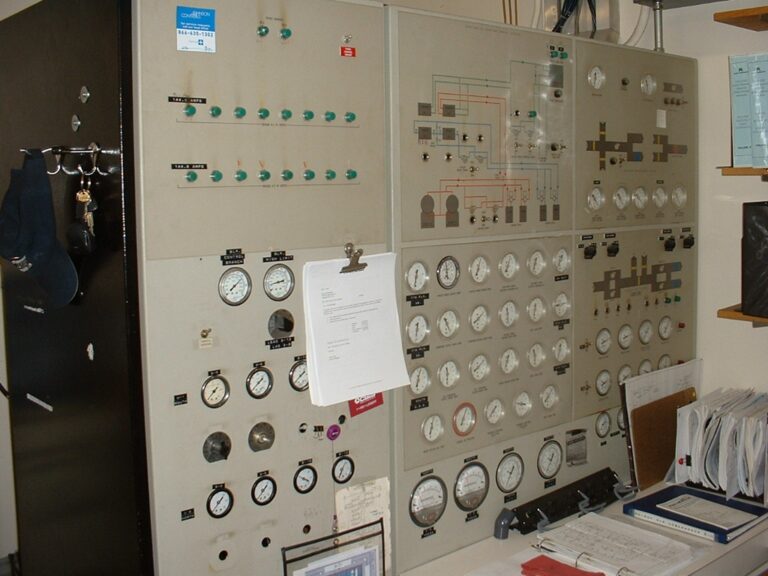
The journey of BAS began in the mid-20th century with the introduction of basic control systems for heating, ventilation, and air conditioning (HVAC). Initially, these systems were mechanical and required manual adjustments, making them labor-intensive and less precise. One of the earliest advancements was the birth of pneumatic controls in the early 1900s. Pneumatic systems used compressed air to control HVAC functions, allowing for more precise and automated adjustments compared to manual methods. These systems dominated the market for several decades due to their reliability and simplicity.

As technology advanced, the 1970s and 1980s saw the advent of digital control systems. These early BAS could monitor and control HVAC systems more efficiently but were still relatively isolated, focusing primarily on individual building functions.

The 1990s brought significant changes with the integration of various building systems into a single BAS platform. This era saw the rise of Direct Digital Control (DDC) systems, which provided more precise control and the ability to network multiple devices. The development of open protocols, such as BACnet and LonWorks, enabled different manufacturers’ systems to communicate, fostering greater interoperability and flexibility.

Why Certain Parts and Systems Are No Longer Available

As BAS technology evolved, older systems and components became obsolete. Several factors contribute to this obsolescence:

  • Technological Advancements: Newer technologies offer improved functionality, efficiency, and reliability. As a result, manufacturers phased out older, less efficient components in favor of modern alternatives.
  • Standardization and Protocol Changes: The industry has gradually moved towards standardized protocols like BACnet, leading to the discontinuation of proprietary systems that can’t easily integrate with newer technologies.
  • Manufacturer Support: As companies innovate, they eventually stop supporting older systems and parts, focusing their resources on current and future technologies. This lack of support makes it difficult to maintain and repair outdated systems.
  • Regulatory and Compliance Issues: New regulations and building codes often require more advanced and efficient systems, rendering older components non-compliant and, therefore, unusable.
Technological Advancements Shaping Current BAS Capabilities

Modern BAS are vastly different from their predecessors, thanks to numerous technological advancements:

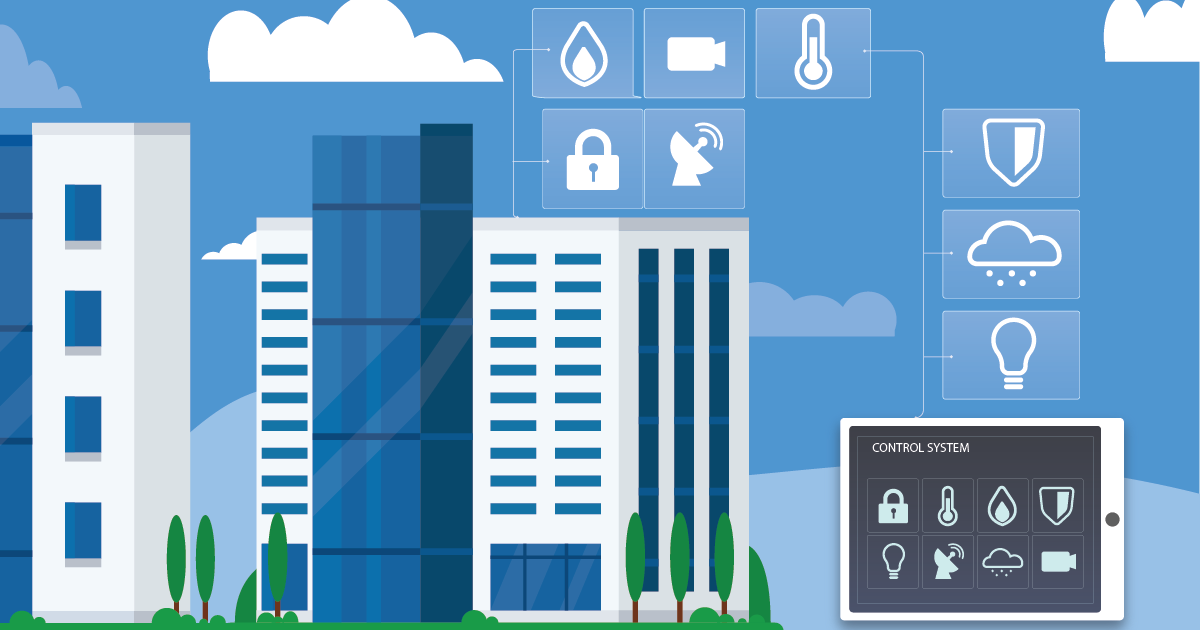
  • Integration and Interoperability: Today’s BAS can integrate various building systems, including HVAC, lighting, and security, into a single platform. This integration enables centralized control and monitoring, improving efficiency and response times.
  • Smart Technologies: The emergence of the [simple_tooltip content=’The interconnection via the internet of computing devices embedded in everyday objects, enabling them to send and receive data.’]Internet of Things (IoT)[/simple_tooltip] has revolutionized BAS by allowing devices to communicate and share data in real time. Smart sensors and actuators provide granular control and insights, optimizing building performance.
  • Cloud Computing and Analytics: Cloud-based BAS platforms offer remote access and control, making it easier to manage multiple buildings from a single interface. Advanced analytics help in predictive maintenance, energy management, and fault detection, leading to significant cost savings and improved building performance.
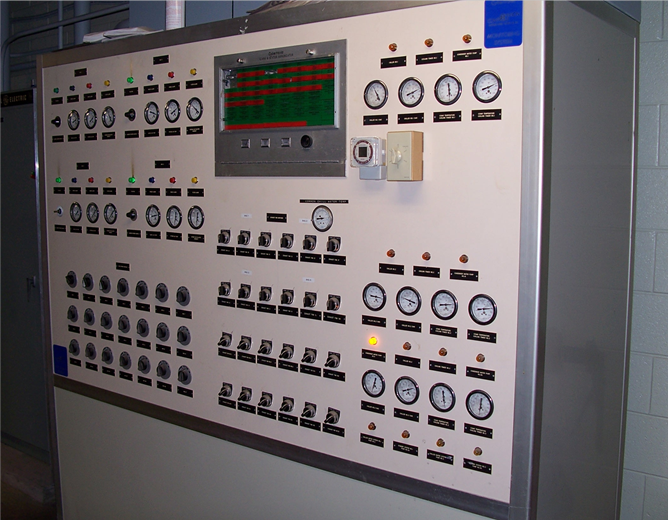
  • User-Friendly Interfaces: Modern building automation systems feature intuitive, user-friendly interfaces that simplify system management. These interfaces often include graphical representations of building systems, making it easier for operators to monitor and control various functions.

Today's BAS

The evolution of BAS reflects the broader technological advancements and changing needs of the building management industry. While the transition from older systems and parts can present challenges, the benefits of modern BAS in terms of efficiency, reliability, and integration are undeniable. As we look to the future, continued innovation in BAS will further enhance the capabilities and impact of these essential systems.

Contact us to learn more about building automation systems for your commercial or industrial property.

Pipe Lining; Understanding the Commercial Process

Commercial pipe lining is a revolutionary method in plumbing. It offers efficient and cost-effective solutions for rehabilitating deteriorating pipes. In this blog post, we’ll explore commercial pipe lining, how the process works, and why it’s a game-changer for commercial and industrial plumbing systems.

What is Commercial Pipe Lining?

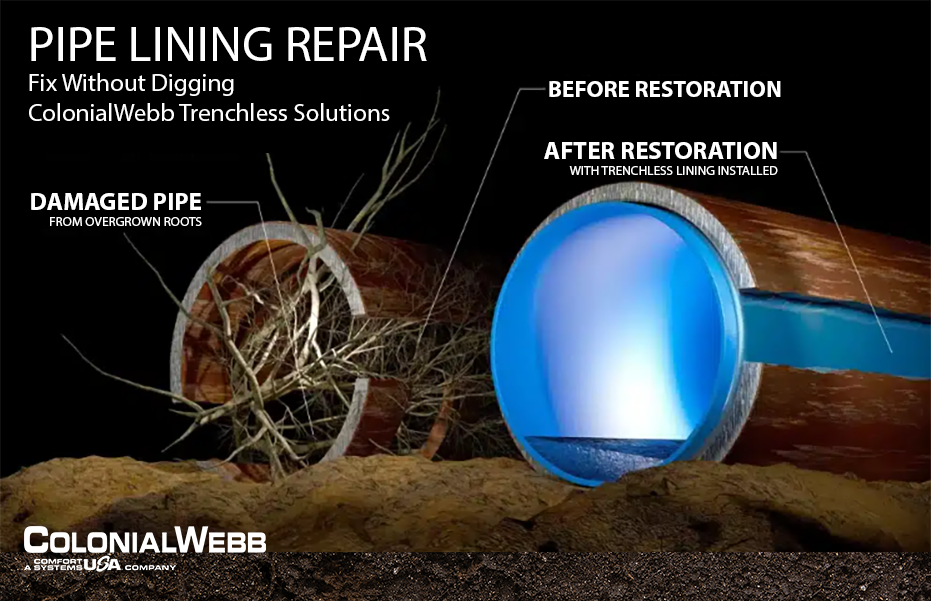
Commercial pipe lining, or cured-in-place pipe (CIPP) lining, is a trenchless rehabilitation technique used to repair and restore damaged or aging pipes without requiring extensive excavation. It involves creating a new, seamless pipe within the existing one, effectively addressing issues like leaks, corrosion, and structural defects.

How Does Commercial Pipe Lining Work?

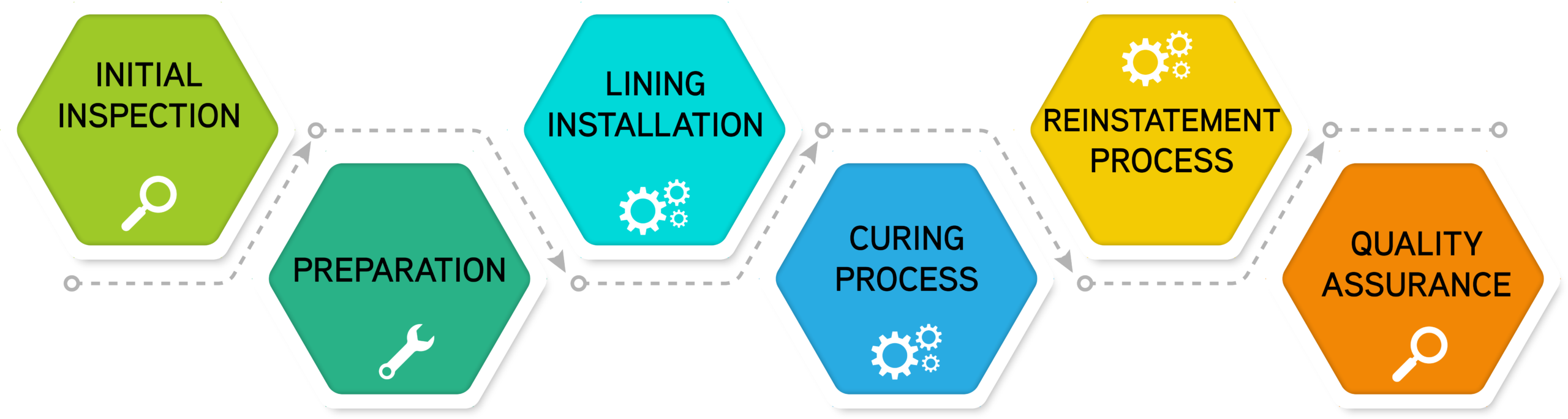
The process can be broken down into several key steps:

Pipe Lining Process

  • Initial Inspection: The process begins with thoroughly inspecting the pipes using advanced technology such as cameras and sensors. This inspection helps identify the extent of damage, areas of concern, and the suitability of pipe lining as a rehabilitation method.
  • Preparation: Before lining the pipes, they must be cleaned and prepared to ensure proper adhesion of the lining material. This typically involves removing debris, scale buildup, and any barriers that could affect the lining process.
  • Lining Installation: Once the pipes are prepared, the lining material is introduced into them using specialized equipment. The lining material, often a flexible resin-saturated fabric or fiberglass mat, is inserted into the pipe and inflated to conform to its shape.
  • Curing Process: After the lining is in place, a curing process is initiated to harden and seal the material. Depending on the type of lining material used, this can be achieved through steam, hot water, or ultraviolet (UV) light. The curing process creates a new, durable inner pipe within the existing one.
  • Reinstatement Process: Once the liner is cured, lateral lines connecting to the newly lined pipe will be reinstated utilizing a robotic cutter. This robotic cutter employs specialized cutting heads and a camera to ensure precise cutting, allowing for the entire flow of the pipe.
  • Quality Assurance: Quality assurance measures are taken to ensure the integrity and functionality of the restored pipes. This includes pressure testing, leak detection, and inspections to verify the lining is free from defects and meets industry standards.
Benefits of Commercial Pipe Lining

Commercial pipe lining offers a range of benefits that make it a preferred choice for pipe rehabilitation. Those benefits include:

  • Minimal Disruption: Commercial pipe lining is trenchless. It minimizes disruption to operations, reduces downtime, and eliminates the need for extensive excavation.
  • Cost-Effective: Pipe lining’s trenchless nature results in lower labor and material costs than traditional pipe replacement methods.
  • Durability: The new lining material provides enhanced durability, corrosion resistance, and longevity, extending the lifespan of the rehabilitated pipes.
  • Environmentally Friendly: Pipe lining reduces waste and environmental impact by avoiding the disposal of old pipes and minimizing the use of new materials.

Pipe Lining Repair, Trenchless Pipe Repair

Commercial pipe lining is a highly effective and innovative solution for rehabilitating damaged or deteriorating pipes. By understanding the process of pipelining and its numerous benefits, property owners and facility managers can make informed decisions to maintain efficient plumbing systems and avoid costly disruptions.

Contact us today to learn more about our Pipe Rehabilitation Solutions and Services. Let us help ensure the lifespan and performance of your plumbing infrastructure.

Signs Your Pipes Need Rehabilitation: Don’t Wait for Catastrophes

As someone responsible for maintaining a property or facility, monitoring your plumbing system’s health is crucial. Ignoring signs of pipe wear and tear can lead to expensive repairs and disruptions. In this blog post, we’ll discuss common signs that indicate your pipes may need rehabilitation, stressing the importance of staying proactive to prevent major issues down the line.

Here are common signs that your pipes need rehabilitation:

Visible Corrosion or Rust

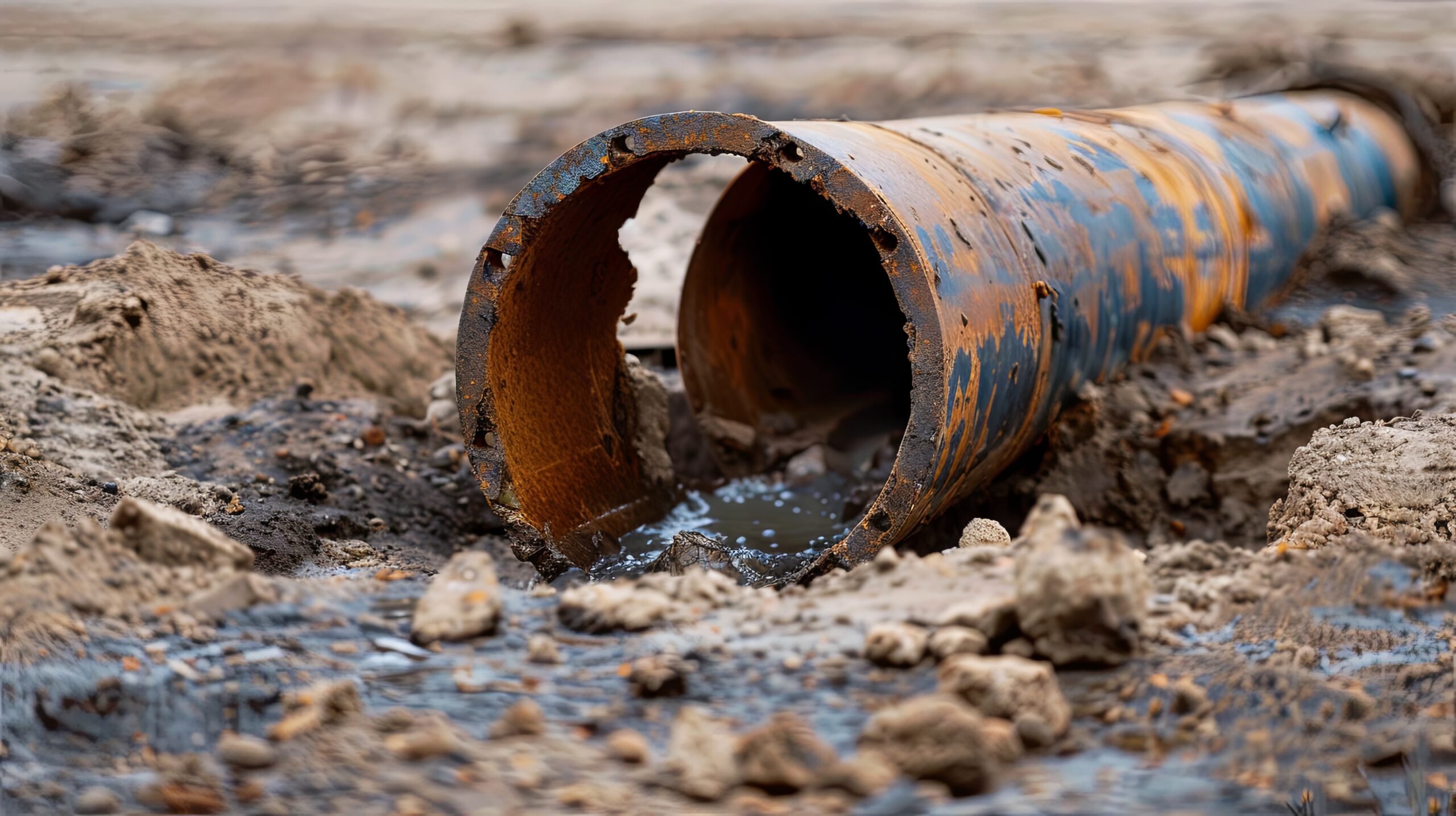
One of the clearest indications that your pipes may need attention is visible corrosion or rust. Look for discolored patches, flaking, or rough areas on the pipe’s surface. Corrosion weakens pipes over time, potentially leading to leaks and structural problems. Regular checks can catch these signs early and save you from costly repairs.

Frequent Leaks or Water Stains

Keep an eye out for frequent leaks or water stains on walls, ceilings, or floors. These can signal underlying pipe issues like cracks, joint failures, or worn-out seals. Taking action promptly through rehabilitation can prevent water damage, mold growth, and potential structural issues.

Low Water Pressure or Flow

If you notice a drop in water pressure or flow, it could indicate blockages, corrosion buildup, or leaks in your pipes. While it might also be caused by factors like sediment buildup in fixtures, persistent low water pressure should prompt a closer look at your pipes to identify and resolve any underlying problems.

Unpleasant Odors or Discolored Water

Be wary of unpleasant odors coming from your taps or discolored water. These are warning signs of pipe contamination or deterioration. Rusty or foul-smelling water may indicate corrosion, bacterial growth, or chemicals leaking from old pipes. Addressing these issues with pipe rehabilitation can restore water quality and safety.

Noisy Pipes or Banging Sounds

Loud noises such as banging, rattling, or whistling coming from your pipes during use can be concerning. They could signal loose fittings, [simple_tooltip content=’Water hammer, also known as hydraulic shock or hydraulic surge, is a pressure surge that can occur in piping systems when a fluid is forced to stop or change direction suddenly.’] water hammer[/simple_tooltip] issues or pipe movement due to wear and tear. These noises not only disrupt peace but also indicate potential problems that need attention to avoid further damage.

Aging Infrastructure

If your plumbing system is aging or nearing the end of its expected lifespan, it’s wise to consider rehabilitation proactively. Older pipes are more susceptible to corrosion, leaks, and failures, making timely rehabilitation crucial to prevent emergencies and costly repairs.

Pipe Corrosion

Don’t wait until a major pipe catastrophe strikes. Being aware of these common signs that your pipes may need rehabilitation and conducting regular inspections can save you from costly repairs, property damage, and disruptions. Invest in proactive maintenance and rehabilitation to ensure a reliable and efficient plumbing system for your property or facility.

Ready to address your pipe rehabilitation needs? Get in touch with us today for expert guidance and tailored solutions to keep your pipes in top condition. Or visit our Pipe Rehabilitation Solutions and Services page to learn more.

The Future of HVAC: Conventional vs Magnetic Bearing Chillers

In the dynamic world of HVAC technology, a debate is unfolding, and it revolves around the choice between Conventional Chillers and the cutting-edge Magnetic Bearing Chillers. At Colonialwebb, we are your trusted HVAC partner, equipped with the expertise to guide you through this pivotal decision. Below, we delve into the key points you need to consider regarding these two chiller options.


Magnetic Bearing Chillers: Elevating Efficiency and Precision

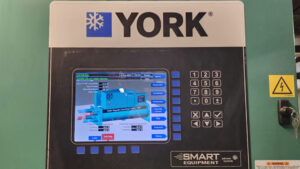
York Magnetic Bearing Chiller

Advantages:
Higher Efficiency: When it comes to energy efficiency, Magnetic Bearing Chillers are a game-changer, particularly at partial load conditions. They usher in lower energy consumption and operational costs, ensuring sustainability for your HVAC systems.

Reduced Maintenance: Embracing state-of-the-art magnetic bearing technology, these chillers bid farewell to cumbersome mechanical bearings. The result? Reduced maintenance requirements and minimal downtime, saving you valuable time and resources.

Unprecedented Reliability: By eliminating mechanical bearings, they offer unrivaled system reliability. Say goodbye to bearing-related failures and hello to uninterrupted performance.

Precise Control: Magnetic bearings empower you with unparalleled control over compressor speed and operation. This precise control translates to superior performance and precise temperature regulation, enhancing the comfort and efficiency of your HVAC system.

Disadvantages:
Premium Initial Cost: Magnetic Bearing Chillers may command a higher upfront investment, attributable to the advanced technology they boast. However, the long-term benefits far outweigh this initial cost.

Specialized Expertise: Maintenance and repair of magnetic bearing systems might necessitate specialized knowledge and equipment. But worry not, as ColonialWebb has the expertise to ensure your system stays in top-notch condition.

Limited Availability: Depending on your location and market, Magnetic Bearing Chillers might have limited availability and service options. Yet, their widespread adoption is on the rise.

Conventional Chillers: A Cost-Efficient Classic

Advantages:
Cost-Effective Entry: Conventional Chillers are known for their budget-friendly initial cost, making them an accessible option for many HVAC projects.

Familiar Technology: These chillers rely on well-established technology, allowing maintenance personnel with general HVAC expertise to efficiently handle repairs and maintenance tasks.

Accessibility: Conventional Chillers enjoy widespread availability and have firmly established their presence in the market.

Disadvantages:

Efficiency Challenges at Partial Loads: In scenarios where full capacity isn’t necessary, Conventional Chillers may exhibit lower efficiency, resulting in higher energy consumption and operational costs.

Maintenance Demands: Mechanical bearings, inherent to conventional chillers, demand regular maintenance, potentially leading to more frequent downtime.

Reliability Concerns: Over time, mechanical bearings can wear out, potentially causing operational disruptions and heightened maintenance needs.

York Magnetic bearing chiller panel

Key Considerations: Making an Informed Choice

When choosing between magnetic bearing and conventional chillers, consider the following factors:

Energy Efficiency Goals: If prioritizing energy efficiency is paramount, especially in situations where varying loads are expected, Magnetic Bearing Chillers could be the ideal choice.

Budget: Assess your initial budget and weigh the potential long-term savings. Remember that Magnetic Bearing Chillers offer substantial efficiency gains over time.

Maintenance Resources: Evaluate the availability of maintenance expertise and the impact of downtime on your operations. Magnetic Bearing Chillers shine in minimizing downtime.

Application: The unique cooling requirements of your application can sway your decision. Magnetic Bearing Chillers excel in applications requiring precise temperature control.

Long-Term Cost Analysis: Undertake a comprehensive lifecycle cost analysis, factoring in upfront costs as well as long-term operational and maintenance expenses.


Your Tailored HVAC Solution Awaits

In conclusion, there is no single answer to the Magnetic Bearing Chillers vs. Conventional Chillers problem. Your choice hinges on your specific circumstances and priorities. The good news is that ColonialWebb stands ready to assist you. We recommend scheduling a consultation with one of our HVAC professionals to receive a personalized recommendation tailored to your unique needs. Elevate your HVAC system to new heights with ColonialWebb, your partner in innovation and efficiency.

Electrical Circuits: Underslab versus Overhead

Colonialwebb’s  Electrical Construction team are experts in installing circuits in various applications depending on the needs of our customer. However, our preferred method of running electrical circuits is to install it under the building slab. We enter the project early, before the concrete is poured and the other trades compete to work in the same space. This offers advantages in terms of labor efforts. Each method has its own advantages and considerations based on the specific requirements of the building and its intended use.

Underslab Electrical Circuits


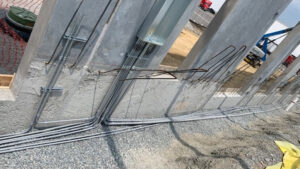
Electrical circuit installed underslab

Installation: Underslab electrical circuits involve placing electrical conduits and wiring underneath the cement slab or foundation of a building during its construction or renovation.

Advantages:

Aesthetics: Underslab wiring is pleasing to the eye as there are no visible wires or conduits on the walls or ceilings.
Space Saving: It saves wall and ceiling space, allowing for a cleaner and more open appearance.
Durability: Wiring under the slab is protected from potential damage caused by environmental factors or accidental impact.

Considerations:

Installation Complexity: Installing underslab wiring requires coordination with other construction activities and careful planning to ensure that conduits are properly placed.
Accessibility: In case of future changes or repairs, underslab wiring might require breaking up the cement floor. As a result, disruption and costs can add up.
Limited Flexibility: Changes to the electrical layout might be challenging after the concrete slab is poured.


Overhead Electrical Circuits


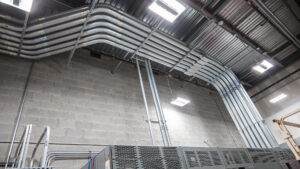
Electrical circuit installed overhead

Installation: Overhead electrical circuits involve mounting conduits, wiring, and fixtures on walls, ceilings, or exposed support structures of the building.

Advantages:

Accessibility: Overhead wiring is easier to maintain, repair, and modify, as it doesn’t require breaking cement.
Flexibility: Changes to the electrical system are relatively easier to perform as conduits and wiring are easy to reach.

Considerations:

Aesthetics: Overhead wiring might be less visually appealing as conduits and wires are visible.
Space Usage: Overhead wiring can take up wall and ceiling space, affecting interior design and aesthetics.
Vulnerability: Overhead wiring can be susceptible to damage from impacts or environmental factors.

Conclusion:

The choice between underslab and overhead electrical circuits depends on factors such as the design, purpose, looks, future flexibility, and budget. A combination of both methods are common. Circuits placed above for easier access and others placed underslab for a cleaner appearance and protection. Let ColonialWebbs Electrical experts help, Schedule a consult with one of our professionals to help you consider the specific needs of the project before making a decision.

Clean Air Using Bipolar Ionization and Ultraviolet Irradiation

Breathing clean air is essential for living and maintaining a healthy life. Indoor air quality is easy to forget about, although many of us spend the majority of our time inside. Whether it’s an office building or a healthcare facility, air quality is important. The conversation around indoor air purification has intensified in recent years due to COVID-19. Two effective ways of cleaning indoor air are bipolar ionization and ultraviolet irradiation in your HVAC systems.

Bipolar Ionization

Bipolar Ionization, or BPI, converts oxygen molecules to charged ions using electric voltage. These charged ions are effective against viruses, bacteria, and mold. The ions attach to contaminants and make them large enough for HVAC system filters to capture them. Some contaminants become heavy enough to fall onto surfaces that are easier to clean.
ions created for bipolar ionization to clean air

BPI also removes organic compounds, odors, and allergy-causing dangers. Bipolar Ionization doesn’t replace MERV air filtration but helps boost the filtration system.

Ultraviolet Irradiation

Ultraviolet light is one of several types of light that exist within the entire light spectrum. UV lamps have long been used to control infectious microorganisms in medical facilities. A UV-C fluorescent lamp generates light that can inactivate mold, bacteria, and viruses.
Light spectrum ranging from infrared to ultraviolet

Ultraviolet HVAC systems come in two main categories: air sterilization and coil sterilization. Air Sterilization is an in-duct system. It disinfects the air as it moves through the ducts of an HVAC system.  Coil Sterilization is a more targeted approach to zapping air pollutants. UV HVAC devices are placed near high-risk components such as condensation pans to keep them clean.

Clean Indoor Air Using HVAC Systems

Both bipolar ionization and ultraviolet irradiation are effective ways to ensure the air you’re breathing is clean and healthy. Keeping indoor air free of contaminants starts with your HVAC system. If you’re considering one of these options for an upcoming project or can’t decide between the two, contact the experts at ColonialWebb. The trusted experts at ColonialWebb will advise you on the best system for your big project!

Biofilm in HVAC Systems

Indoor air quality is critical for maintaining a healthy and safe environment for building occupants. Unfortunately, pollutants, allergens, and microorganisms such as bacteria, viruses, and mold can contaminate indoor air, leading to various health issues. Ultraviolet Germicidal Irradiation (UVGI) is a technology that uses ultraviolet (UV) light to inactivate and destroy microorganisms, preventing them from becoming biological hazards.


Biofilm in HVAC Systems

Biofilm is a complex microbial matrix of mold and bacteria that grows on the fins of the HVAC system’s evaporator coils, drain pans, and ducts. What appears as dirt, slime, or sludge on the surfaces of these components is, in fact, biofilm. Biofilm can also grow on other surfaces where moisture and nutrients are present. The presence of biofilm in HVAC systems can create serious health hazards for building occupants.

Numerous studies have demonstrated that improper maintenance of HVAC systems can contribute to the growth and dissemination of pathogenic, opportunistic bacteria, viruses, and mold. Biofilms give off products of metabolism known as volatile organic compounds (VOCs), which can trigger occupant complaints of watery eyes, headaches, and even severe allergy and asthma responses. In some extreme cases, biofilms can lead to Sick Building Syndrome (SBS), a condition in which occupants experience symptoms related to a particular building.

The quality of indoor air is influenced by the levels of bioaerosols, contaminants, and pollutants, which can significantly impact occupant health and development. Therefore, it is essential to take steps to prevent biofilm growth in HVAC systems and improve indoor air quality.


UVGI Technology to Prevent Biofilm Growth

Ultraviolet Germicidal Irradiation (UVGI) technology has proven to be a highly effective means of preventing the growth of biofilms in HVAC systems. UVGI uses ultraviolet energy to inactivate and destroy microorganisms, including bacteria and viruses, by altering their DNA and preventing reproduction. UVGI’s germicidal effect is strongest when using UVC energy, which has a 200 to 280 nanometers wavelength.

UVGI technology can be applied to HVAC systems in several ways, including using ultraviolet germicidal lamps. These lamps emit a concentrated radiation of ultraviolet energy that destroys microorganisms on contact. Installing UVGI lamps in an HVAC system requires air handlers and duct system modifications to accommodate the lamps. The process also requires new power to feed each lamp.


ColonialWebb and Chesterfield Country School Systems

ColonialWebb’s Special Projects MEP team partnered with Chesterfield County School Systems to install UVGI systems in 15 schools. The installation process involved modifying the HVAC air handlers and duct systems to accommodate the UV lamps. The skilled team of HVAC technicians, sheet metal workers, and electricians performed the installation to include new power to feed each of the lamps.

The partnership between ColonialWebb and Chesterfield County School Systems is an excellent example of how UVGI technology can improve indoor air quality and reduce the risk of illness. ColonialWebb is proud to have worked with the county to provide good indoor air quality to the occupants of the school system.


Benefits of UVGI Technology

UVGI technology is a powerful tool for preventing the growth of harmful biofilms in HVAC systems and improving indoor air quality. By using UVC energy to alter the structure and molecular bonds of microorganisms, UVGI effectively neutralizes their ability to reproduce and become a biological hazard. The partnership between ColonialWebb’s Special Projects MEP team and Chesterfield County School Systems is a prime example of the practical applications of UVGI technology in safeguarding public health. With the potential risks associated with indoor air pollution, it is essential to take action to mitigate these issues.

Consider partnering with ColonialWebb to address your air quality concerns using UVGI technology. Contact ColonialWebb’s team of experts today to learn more about how we can help you improve indoor air quality and safeguard the health of your building occupants.

Preparing Your Facility for Electric Vehicle Charging

Electric vehicles (EVs) have recently been at the forefront of the news. With the rise in popularity of brands like Tesla and Rivian, and a commitment from many auto manufacturers to change from traditional vehicle platforms to EVs, your facility will likely need to accommodate these new vehicles soon. While a move to EVs may reduce our dependency on fossil fuels, electrical infrastructure improvements may become necessary. So, is your facility ready for the coming EV wave?

Facility Considerations

 A few questions a facility manager may want to consider to prepare their facility for onsite charging are:

  • Can our current electrical distribution system support my future EV charging needs?
  • Do we want to offer EV charging for free or at a cost to those who park at our facility?
  • Will EVs be implemented as a fleet solution or only for employee parking/charging?
  • Can onsite EV charging offset some of the costs of a traditional vehicle fleet program?

While many buildings have robust electrical distribution systems, some may operate at or near peak capacity. Therefore, it may be advisable to have a comprehensive load study performed prior to planning for new installations. Adding additional electrical capacity may be an option to give your site the needed bandwidth to install multiple chargers. Alternatively, installing [simple_tooltip content=’Solar energy begins with the sun. Solar panels (also known as “PV panels”) are used to convert light from the sun, which is composed of particles of energy called “photons,” into electricity that can be used to power electrical loads.’]solar PV panels[/simple_tooltip] or upgrading older lighting systems may be a way to offset the energy needs of a new EV charging system. Sub-metering of charging stations can also be a solution to help determine electricity costs.

If your facility is in a high-traffic area or offers public parking, installing EV chargers may be a means of opening your doors to new customers. EV charging can be provided as a free service or generate revenue for your facility, with many charging stations offering payment processing options for users.

Fleet EVs have come into focus as the future of commercial vehicles recently. With operation costs much lower, fleet EVs can offer an appealing option.

When planning for a fleet EV charging system, charging durations, eventual fleet size, and charging frequency should all be considerations.

Where to Start? 

If EVs are in your company’s future, now may be the time to start planning for charging installations. A facility electrical load assessment and equipment survey can help determine if service upgrades are required. Additionally, state and federal tax incentives may be available to help offset the cost of new chargers and electrical wiring. With an entire team of solutions engineers, account managers, and electricians, ColonialWebb can help you determine costs, benefits, and return on investment for upgrading your facility to accommodate electric vehicles.

Facility EV Charging Station