


Interest in indoor air quality (IAQ) has grown significantly in recent years as organizations place a greater emphasis on creating healthier, more comfortable indoor environments. Business leaders, facility managers, and building owners increasingly recognize that HVAC systems play a critical role in supporting occupant health through proper ventilation, filtration, and air distribution.
That increased focus has prompted many organizations to evaluate how their buildings support the people inside them. Questions about ventilation, filtration, humidity control, and reducing airborne contaminants have become an important part of facility planning and operations. While expectations around IAQ have evolved, the fundamentals of creating a healthy indoor environment remain the same.
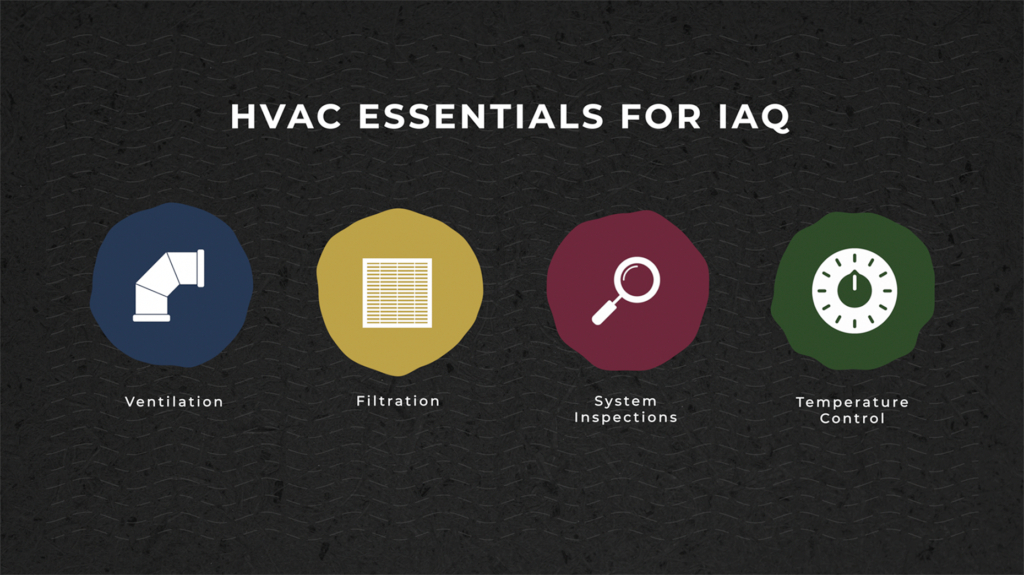
Whether you’re managing an office building, healthcare facility, manufacturing plant, or educational campus, four core principles should be the foundation of every indoor air quality strategy:
Ventilation
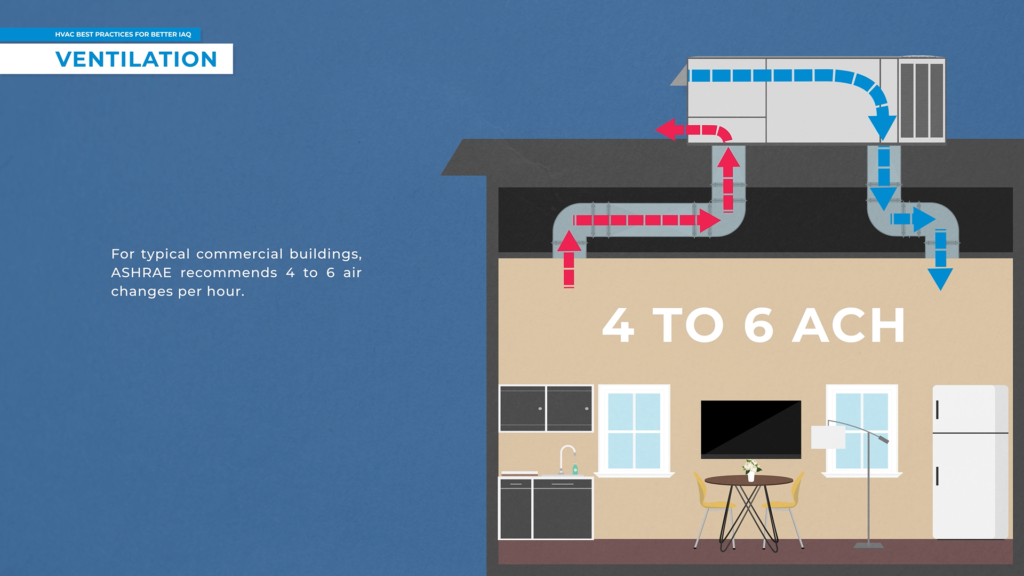
Ventilation plays a critical role in maintaining healthy, comfortable indoor environments. By bringing fresh outdoor air into a building and exhausting stale indoor air, a properly designed and maintained ventilation system helps dilute indoor contaminants, control odors, and support overall indoor air quality.
Providing the right amount of outdoor air is essential. At a minimum, commercial buildings should meet the ventilation rates established by local building codes and applicable industry standards. Verifying that outdoor air and exhaust systems are operating as intended often requires testing, adjusting, and balancing (TAB)—a specialized service that measures airflow and ensures your HVAC system is performing as designed.
Increasing outdoor air ventilation can improve indoor air quality, but it may also increase energy use if not managed properly. Strategies such as energy recovery ventilators (ERVs), demand-controlled ventilation, and well-sealed building envelopes can help maintain healthy indoor environments while minimizing the impact on energy consumption.
Filtration
Kind of like the lungs of an HVAC system, filters ensure that air circulating through a building is refined for human consumption — they trap particulates and contaminants that can affect our well-being. Therefore, it is important to ensure filters are replaced at the appropriate times and not get overloaded between changes.
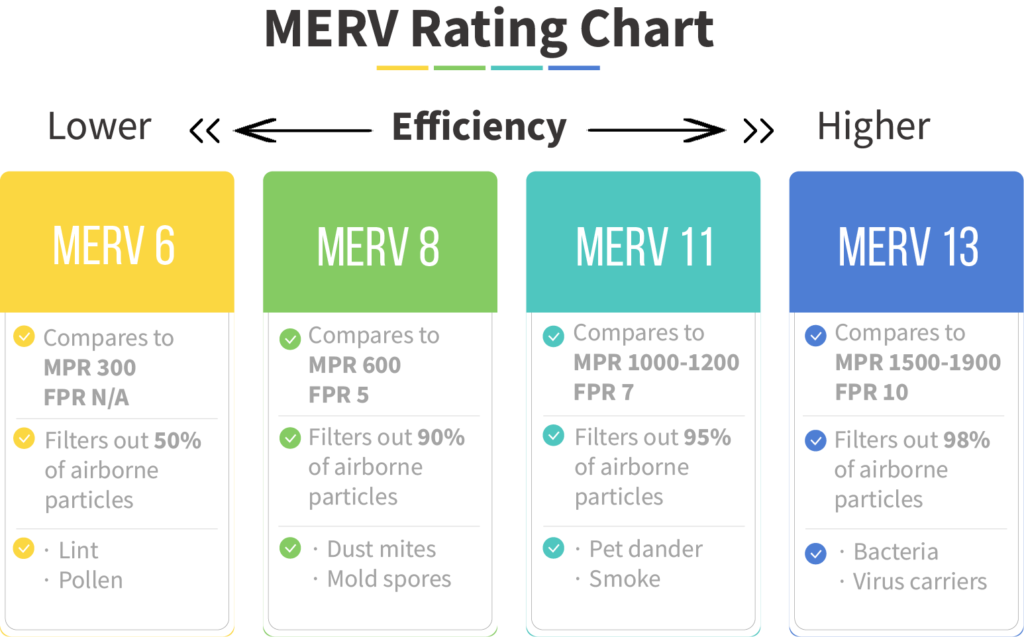
According to ASHRAE, a filter rating of MERV 13 is recommended for most building systems. If this isn’t doable, then at the very least, have a minimum of MERV 11 filters. The chart below depicts the overall effectiveness of various MERV-rated filters. The higher the MERV rating, the more effective the filter is at capturing certain types of particles, such as bacteria and virus carriers.
Check out our blog post for more insights into MERV ratings.
System Inspections
The third essential for good IAQ is HVAC System Inspections. Much like taking your car to a mechanic for an inspection or going to the doctor for a yearly physical, your HVAC system needs to be thoroughly reviewed and assessed by experienced HVAC professionals to confirm that all system components function properly. This includes everything from temperature and thermostat checks to inspections of cooling systems, electrical connections, refrigerant levels, safety measures, coils, pressure, and more.
Filters are not the only thing that needs to be maintained in your system, so make sure to check your HVAC service agreement to ensure that comprehensive system inspections are indeed happening. Additionally, ensure that at least one Performance Level Inspection is included in your agreement. This will provide insight into the efficiency of your system and documentation for future maintenance or upgrades.
Temperature Control
A comfortable indoor environment is about more than convenience—it’s essential to occupant comfort, productivity, and overall building performance. Inconsistent temperatures, frequent hot and cold calls, and spaces that never seem to reach the desired setpoint can disrupt daily operations and create unnecessary frustration for occupants.
Maintaining consistent temperatures requires more than adjusting a thermostat. It depends on properly functioning HVAC equipment, balanced airflow, and controls that respond to changing building conditions. Building automation systems (BAS) can further enhance performance by continuously monitoring and adjusting equipment to maintain comfort while optimizing energy use.
Whether you’re managing an office, healthcare facility, school, or industrial space, maintaining a stable indoor environment helps create a more comfortable experience for occupants while supporting the efficient operation of your building.
.

Conclusion
Improving indoor air quality doesn’t have to be overwhelming. The first step is understanding how your building operates, how its HVAC systems perform, and how occupants use the space. From there, you can identify practical opportunities to improve ventilation, filtration, temperature control, and overall system performance.
Small improvements can make a meaningful difference. A well-maintained HVAC system helps create healthier, more comfortable indoor environments while supporting energy efficiency, reducing unexpected maintenance issues, and extending the life of your equipment.
If you’re looking to improve the indoor air quality in your commercial facility, ColonialWebb can help. Our experts can assess your existing HVAC system, identify opportunities for improvement, and recommend solutions that align with your building’s needs and operational goals.
Share this post

