


If you work with HVAC systems, then you might already know quite a bit about air filtration. After all, changing air filters is the cornerstone of most service agreements; it’s one of those things that has to be done regularly and can mean the difference between good and bad indoor air. Filtration is like the gatekeeper, or first line of defense in any HVAC system — contaminants are on the offense and have to be stopped by filters before entering recirculated air.
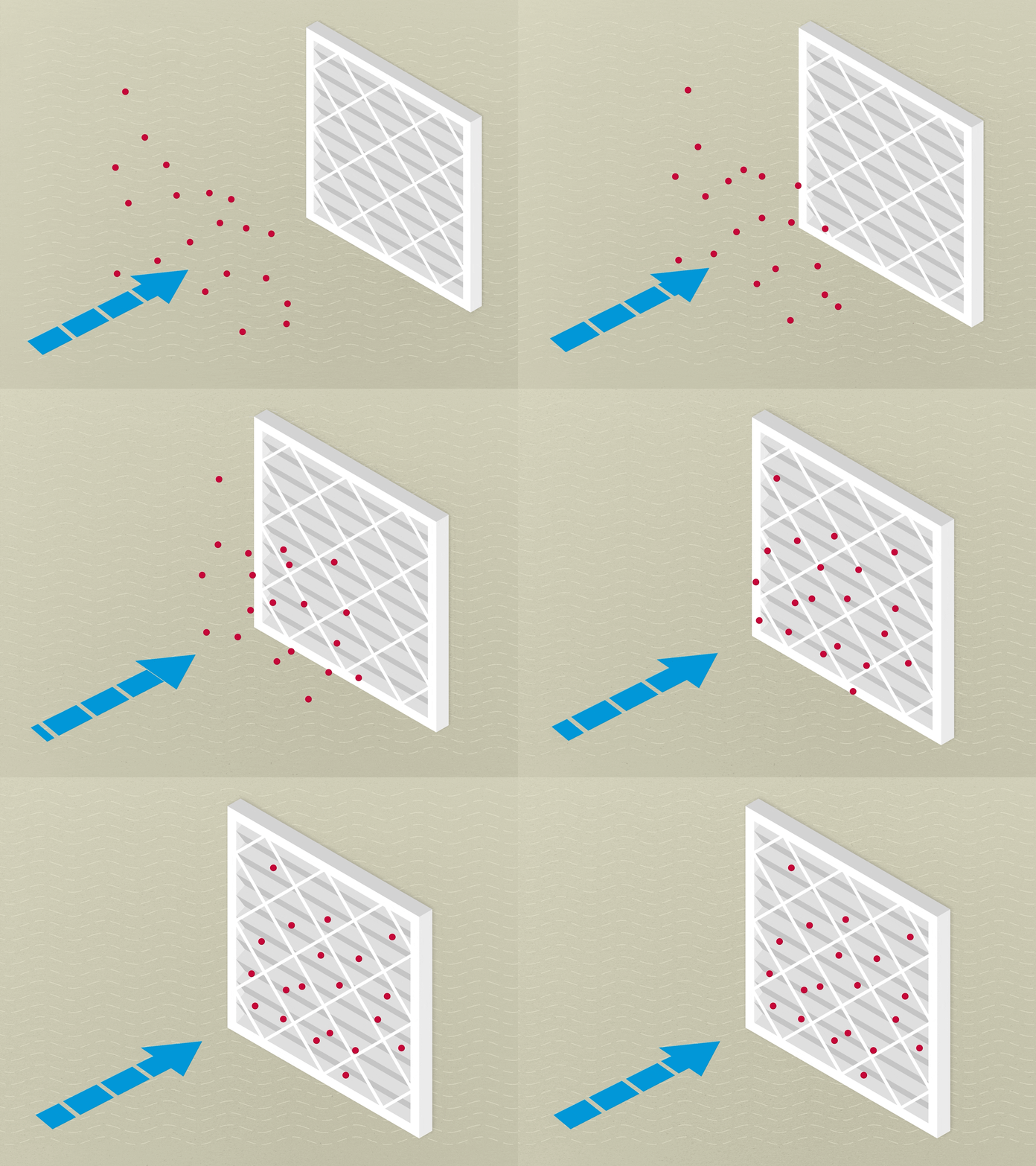
To capture airborne contaminants, your HVAC system relies on air filters. But not all filters perform the same. That’s where MERV (Minimum Efficiency Reporting Value) ratings come in.
Developed by ASHRAE (the American Society of Heating, Refrigerating and Air-Conditioning Engineers), the MERV rating is the industry standard for measuring how effectively an air filter captures airborne particles. Ratings range from 1 to 20, with higher numbers indicating a filter’s ability to trap smaller particles.
- A filter with a higher MERV rating, such as a MERV 13 filter, captures smaller particulates than a filter with a lower rating, such as a MERV 8.
- Lower-rated filters tend to be in places such as residential spaces, while higher-rated filters tend to be in communal or commercialized spaces with larger HVAC systems.
- More filtration isn’t always better. While a MERV 17 filter might make sense for a space like a surgical room in a hospital where sanitation is of the utmost importance, it wouldn’t make sense in a large commercial building because the filter’s smaller pores will block more airflow in a system.
The graphic below will give you a broad view of common applications and the sizes/types of contaminants captured for different MERV rated filters:
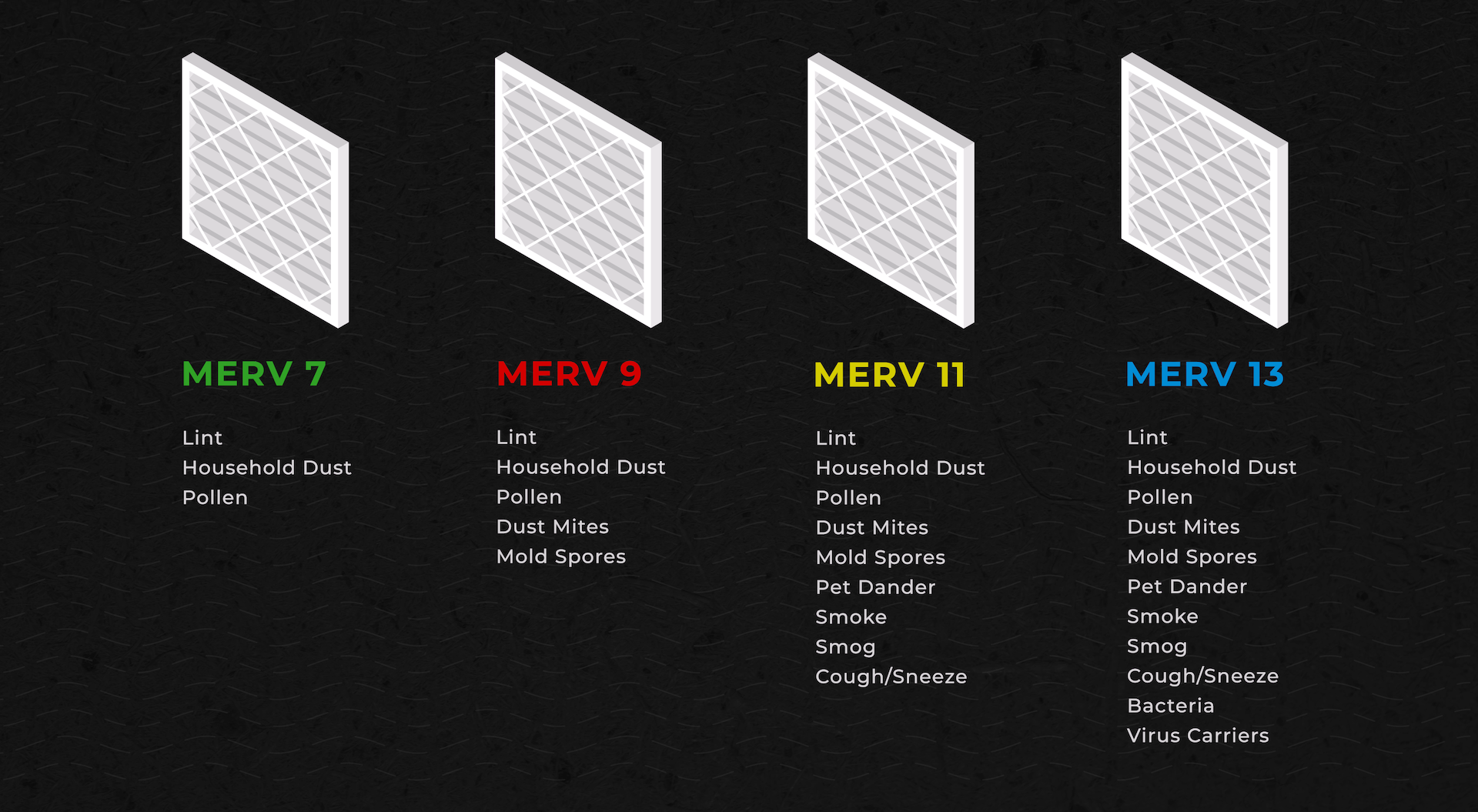
If you are responsible for HVAC systems in a commercial space, we recommend using MERV 13 filters at ColonialWebb, especially if you are looking to take the necessary steps to improve your Indoor Air Quality (IAQ). If your system doesn’t allow MERV 13 or the added cost is simply out of the equation, then the next best thing is MERV 11.
The filtration needs of any indoor environment differ depending on the size, use, and number of occupants. Regardless, it is important to make sure that you are supplying tenants with air that will keep them comfortable and healthy.
If you are looking for more information on indoor air quality, we recently published a long-form blog post, Why Indoor Air Quality Matters, that serves as a great introduction to the topic. Additionally, if you are responsible for the HVAC systems in your buildings, you might be interested in learning more about ColonialWebb’s HVAC and Indoor Air Quality services. We hope this post helped you learn more about the MERV rating system!
Share this post

