


Colonialwebb’s Electrical Construction team are experts in installing circuits in various applications depending on the needs of our customers. However, our preferred method of running electrical circuits is to install it under the building slab. We enter the project early, before the concrete is poured and the other trades compete to work in the same space. This offers advantages in terms of labor efforts. Each method has its own advantages and considerations based on the specific requirements of the building and its intended use.
Underslab Electrical Circuits
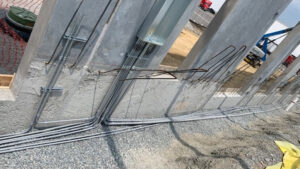
Installation: Underslab electrical circuits involve placing electrical conduits and wiring underneath the cement slab or foundation of a building during its construction or renovation.
Advantages:
Aesthetics: Underslab wiring is pleasing to the eye as there are no visible wires or conduits on the walls or ceilings.
Space Saving: It saves wall and ceiling space, allowing for a cleaner and more open appearance.
Durability: Wiring under the slab is protected from potential damage caused by environmental factors or accidental impact.
Considerations:
Installation Complexity: Installing underslab wiring requires coordination with other construction activities and careful planning to ensure that conduits are properly placed.
Accessibility: In case of future changes or repairs, underslab wiring might require breaking up the cement floor. As a result, disruption and costs can add up.
Limited Flexibility: Changes to the electrical layout might be challenging after the concrete slab is poured.
Overhead Electrical Circuits
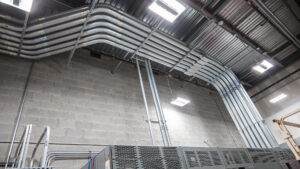
Installation: Overhead electrical circuits involve mounting conduits, wiring, and fixtures on walls, ceilings, or exposed support structures of the building.
Advantages:
Accessibility: Overhead wiring is easier to maintain, repair, and modify, as it doesn’t require breaking cement.
Flexibility: Changes to the electrical system are relatively easier to perform as conduits and wiring are easy to reach.
Considerations:
Aesthetics: Overhead wiring might be less visually appealing as conduits and wires are visible.
Space Usage: Overhead wiring can take up wall and ceiling space, affecting interior design and aesthetics.
Vulnerability: Overhead wiring can be susceptible to damage from impacts or environmental factors.
Conclusion:
The choice between underslab and overhead electrical circuits depends on factors such as the design, purpose, looks, future flexibility, and budget. A combination of both methods is common. Circuits are placed above for easier access, and others are placed underslab for a cleaner appearance and protection. Let ColonialWebb’s Electrical experts help. Schedule a consult with one of our professionals to help you consider the specific needs of the project before making a decision.
Share this post

